
J
John Iwuozor
Guest
Watch out for these indicators that your CMS isn’t working how you expect, and may even be holding you back.
What if the CMS system you trust to keep you moving is the very thing slowing you down?
The most dangerous CMS workflows are the ones that look like they’re working. They are helping your teams to push content through, launch campaigns consistently, without the system itself showing any sign of weakness. But when it’s time to innovate, it’s too outdated to keep you competitive.
Have you ever sat with your team to ask why your marketing budget keeps rising with every new strategy? What if your CMS workflow could scale with those strategies?
That would mean lower costs and an ROI that climbs instead of stalls. The subtle truth is, your current workflow may not be able to support your new strategy, and that is one of the clearest signs it is already outdated.
In this article, you will learn the different signs to watch for in your CMS, the hidden costs you are already paying and how to flip the script with a modern workflow.
An increased marketing spend can sometimes hint that your CMS workflow needs a rework, but it’s not always the most reliable indicator.
What truly matters are the clear, measurable signs that your business is operating on outdated workflows. Here are some of the signs below:
Your team members are calling out bad technical practices for slow-loading pages, clunky interactions and poor user experiences without mentioning the actual culprit. Many content management systems are built on outdated frameworks that eventually drag down site performance.
Take WordPress, for example. While powerful, it often relies heavily on plugins for customization. Each new plugin adds weight to the system, slowing down your site and creating hidden inefficiencies.
Themeisle’s research confirms this when they tested a site with just five plugins, performance dropped significantly. This is a sign of how quickly outdated workflows can compound into bigger issues.
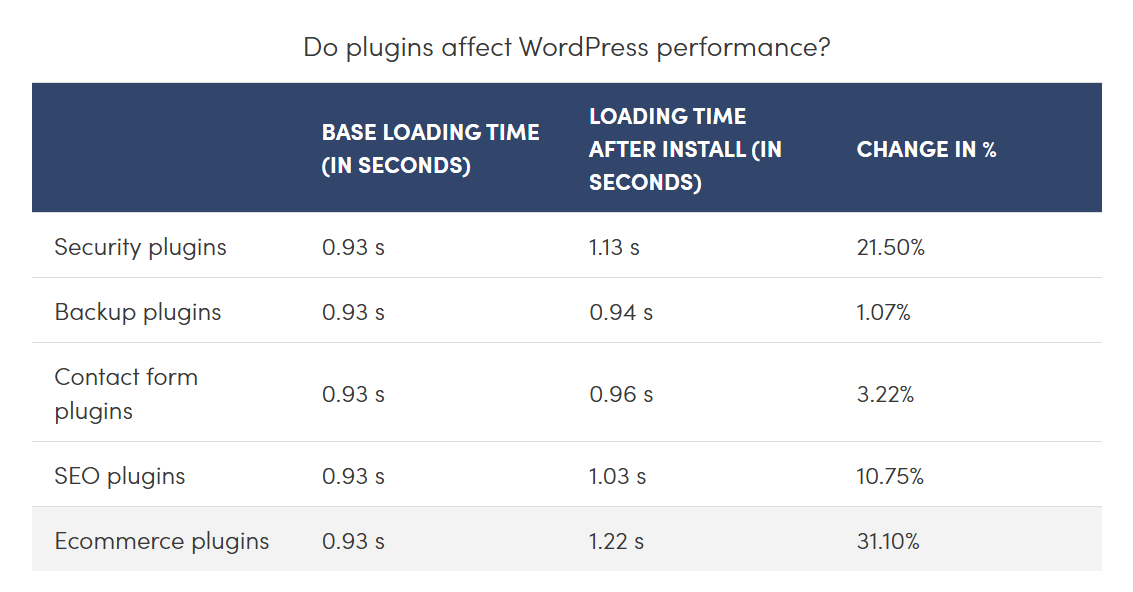
Source: Themeisle
And the business implication of this is frustrated site visitors, a high bounce rate and a reduction in conversion rates, meaning lost revenue.
Traditional CMS platforms often rely on drag-and-drop templates to enable quick customization. While this can reduce reliance on developers for a simple landing page, it comes at a cost. Your business’s creative vision may be boxed into predefined layouts and limited functionality.
Over time, this rigidity stifles innovation, forcing your brand to look and feel like everyone else’s. And in an AI world where differentiation drives engagement, a CMS that restricts flexibility becomes less of a business toolkit and more of a bottleneck.
Traditional CMS platforms were built with legacy systems in mind, which makes smooth integration with modern tools a constant struggle. For your brand, that means difficulty to grow, innovate and keep pace with competitors who can adapt faster.
Even when integrations work, they may create patchwork solutions that can increase security risk and add unnecessary complexity. And the more you find a workaround, the more it drains resources.
Let’s quickly put a price tag on what your old CMS workflows may already be costing your business. These start as technical inefficiencies and ripple through your teams, your budgets and your market position.
As workflows drag, disconnect or break, team morale takes a hit and collaboration suffers. The subtle sign is usually when your teams start pointing fingers. Marketing blames IT for slow product updates, while IT can’t keep up with constant requests for fixes that should be simple.
And before you know it, your productivity system has become a source of team frustration and conflict. Over time, this friction wastes hours and erodes trust, slows execution and quietly eats away at your market share and relevance.
An outdated workflow with a lot of limited customization turns IT into firefighters instead of innovators. When IT teams should be building new features or driving a new strategy, your team spends hours fixing broken access points, patching integrations or troubleshooting broken product links.
Those hours are expensive as they eat into the time needed for innovation and push your business goals further out of reach. The result of this is that customers feel the delays and teams repeat the same fixes again and again. In the end, you’re paying more in salaries while progress stands still, absorbing costs without gaining the growth your business needs.
Customers do not care what CMS you use. They are not concerned about your internal workflows or how many people it takes to publish a single page. What they expect is simple: a fast, seamless and personalized experience.
Now imagine thousands of customers ready to convert but got stuck with an unresponsive CTA button, a clunky checkout or an unexpected outage. Their trust disappears in seconds, and so does the sale.
An Acronis study found that more than 60% of downtime incidents cost over $100,000. That figure does not even capture the big effect of abandoned carts, frustrated visitors and negative word of mouth. An outdated CMS costs productivity as it quietly drains revenue and erodes the credibility your business depends on.
Traditional CMS platforms rely on layers of custom code, outdated plugins and fragile integrations. A single unpatched plugin or neglected update may create an opportunity for unauthorized access to sensitive customer data.
And when that happens, the damage can lead to more chaos such as loss of trust, unexpected legal investigation or loss of brand reputation. Recovery from data breach is expensive. The latest IBM Security report puts the average cost of a data breach at $4.45 million, and that figure does not include lost sales or reputational damage.
The challenge with traditional CMS platforms is not that they are broken, but that their setup is limited. They were built for a different era when publishing a landing page or uploading a blog post with little technical knowledge was enough to stay competitive.
The story has changed today as your team is launching news strategies to stay competitive. They want to launch hyper-personalized campaigns across different channels without raising marketing budget, test new product ideas and adapt quickly to shifting customer demands.
And this is where the problem stemmed from. As they share new ideas, they end up with lengthy workarounds, manual fixes or lengthy IT involvement.
Instead of focusing on creativity and innovation, your team spends valuable time figuring out how to make the CMS do something it was never designed to handle. Meanwhile, competitors with modern, scalable platforms can test, launch and optimize in days while your campaign is still waiting on approvals or technical adjustments.
This eventually leads to slow innovation, missed opportunities and “time to market” stretches longer than expected. The same CMS that has grown with you now feels like a box, simply because it cannot keep pace with modern expectations.
What’s the way out?
The truth is you don’t need another automation hack because you already have enough. What you need is a system that is flexible and powerful enough to support today’s business demands. That means transitioning from a traditional CMS with outdated workflows to a modern headless CMS.
A headless CMS functions as a content repo that isn’t tied to a specific website or application. It uses API to deliver content across different channels and platforms. This makes it a strong fit for today’s content marketing demands.
Here’s what you get with a headless CMS
You don’t need replatforming to scale. A headless CMS is flexible to support your content needs anytime and anywhere as it separates content from presentation. This gives your team the freedom to create once and publish anywhere.
This flexibility means you can easily scale to new channels, markets or product lines without rebuilding your workflows each time, keeping your business agile as demands grow.
Try out Progress Sitefinity - A modern CMS that adapts to your team needs
Today’s customers engage across multiple touchpoints websites, apps, email, chat and even IoT devices. A headless CMS allows you to deliver consistent, personalized experiences across all of them.
Your content becomes channel-agnostic and makes sure your brand messaging is consistent wherever your audience connects with you.
Instead of being boxed in by rigid templates or outdated plugins, a headless CMS integrates smoothly with the tools your teams already use. This allows personalization and well-targeted campaigns that match your audience needs.
For example, Sitefinity CMS integrates data from 1000+ sources (CRM, MarTech) to create unified customer profiles and personalize in real time, at scale. From marketing automation to analytics to ecommerce platforms, everything works together. This can help reduce silos, shorten campaign launch times and keep innovation flowing.
With fewer plugins and less dependency on patchwork fixes, a headless CMS can reduce the surface area for attacks or any technical debts.
Modern CMS platforms are built with stronger security protocols that support compliance efforts related to regulations such as GDPR. This helps protect your business and supports the trust your customers place in you.
Imagine the level of speed your team will experience with a modern CMS platform that supports them with quick and personalized messaging for omnichannel marketing. This becomes a smart advantage for you if your competitors are still running on an old siloed CMS.
Also, you’re no longer relying on plugins that slow down performance to improve your workflow. By decoupling content from the frontend, a headless CMS can deliver faster load times and smoother digital experiences.
In the long run, customers get the speed they expect, while your team benefits from workflows that support growth.
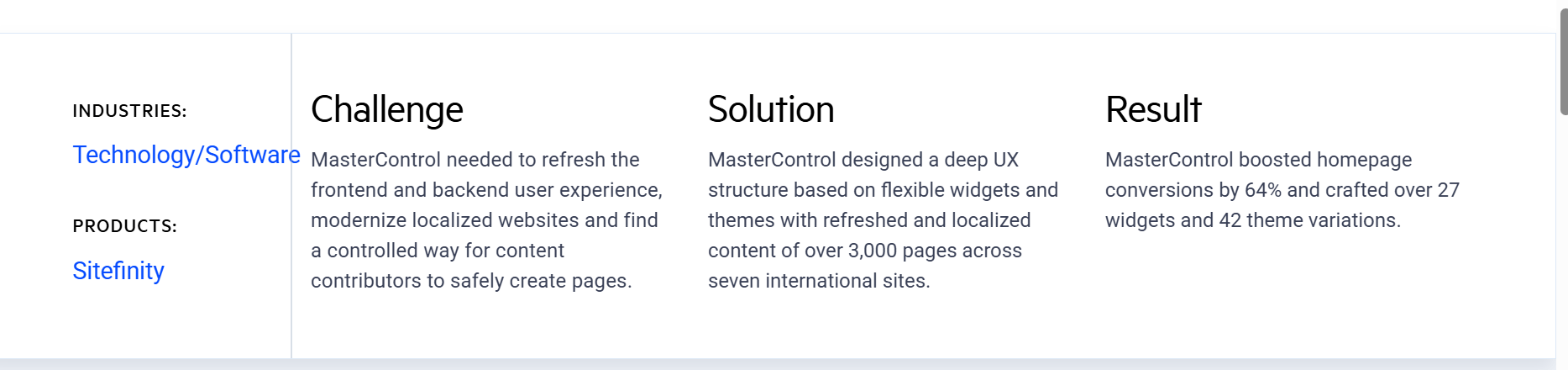
Read a Customer Story About Sitefinity CMS
Modernizing with a headless CMS is no longer a necessity for brands that are ready to compete in the omnichannel marketing era. Competing with a traditional CMS is like running a race wearing outdated gear. You’ll finish eventually, but not before your competitors have already crossed the line.
A modern CMS like Sitefinity can provide you the flexibility to scale, the speed to compete and the security capabilities designed to protect what matters. Progress Sitefinity CMS is a system that adapts to your always changing marketing needs. It includes AI-powered capabilities designed to support customer journey tracking and content creation. Explore Sitefinity CMS now or request a demo to see how it works.
Continue reading...
What if the CMS system you trust to keep you moving is the very thing slowing you down?
The most dangerous CMS workflows are the ones that look like they’re working. They are helping your teams to push content through, launch campaigns consistently, without the system itself showing any sign of weakness. But when it’s time to innovate, it’s too outdated to keep you competitive.
Have you ever sat with your team to ask why your marketing budget keeps rising with every new strategy? What if your CMS workflow could scale with those strategies?
That would mean lower costs and an ROI that climbs instead of stalls. The subtle truth is, your current workflow may not be able to support your new strategy, and that is one of the clearest signs it is already outdated.
In this article, you will learn the different signs to watch for in your CMS, the hidden costs you are already paying and how to flip the script with a modern workflow.
Notable Signs That You’re Running on Outdated CMS Workflows
An increased marketing spend can sometimes hint that your CMS workflow needs a rework, but it’s not always the most reliable indicator.
What truly matters are the clear, measurable signs that your business is operating on outdated workflows. Here are some of the signs below:
1. Poor Website Performance
Your team members are calling out bad technical practices for slow-loading pages, clunky interactions and poor user experiences without mentioning the actual culprit. Many content management systems are built on outdated frameworks that eventually drag down site performance.
Take WordPress, for example. While powerful, it often relies heavily on plugins for customization. Each new plugin adds weight to the system, slowing down your site and creating hidden inefficiencies.
Themeisle’s research confirms this when they tested a site with just five plugins, performance dropped significantly. This is a sign of how quickly outdated workflows can compound into bigger issues.
Source: Themeisle
And the business implication of this is frustrated site visitors, a high bounce rate and a reduction in conversion rates, meaning lost revenue.
2. Rigid Templates
Traditional CMS platforms often rely on drag-and-drop templates to enable quick customization. While this can reduce reliance on developers for a simple landing page, it comes at a cost. Your business’s creative vision may be boxed into predefined layouts and limited functionality.
Over time, this rigidity stifles innovation, forcing your brand to look and feel like everyone else’s. And in an AI world where differentiation drives engagement, a CMS that restricts flexibility becomes less of a business toolkit and more of a bottleneck.
3. Integration Chaos
Traditional CMS platforms were built with legacy systems in mind, which makes smooth integration with modern tools a constant struggle. For your brand, that means difficulty to grow, innovate and keep pace with competitors who can adapt faster.
Even when integrations work, they may create patchwork solutions that can increase security risk and add unnecessary complexity. And the more you find a workaround, the more it drains resources.
The Cost of Outdated CMS Workflows
Let’s quickly put a price tag on what your old CMS workflows may already be costing your business. These start as technical inefficiencies and ripple through your teams, your budgets and your market position.
1. Team Conflict
As workflows drag, disconnect or break, team morale takes a hit and collaboration suffers. The subtle sign is usually when your teams start pointing fingers. Marketing blames IT for slow product updates, while IT can’t keep up with constant requests for fixes that should be simple.
And before you know it, your productivity system has become a source of team frustration and conflict. Over time, this friction wastes hours and erodes trust, slows execution and quietly eats away at your market share and relevance.
2. Wasted Resources and Operational Failures
An outdated workflow with a lot of limited customization turns IT into firefighters instead of innovators. When IT teams should be building new features or driving a new strategy, your team spends hours fixing broken access points, patching integrations or troubleshooting broken product links.
Those hours are expensive as they eat into the time needed for innovation and push your business goals further out of reach. The result of this is that customers feel the delays and teams repeat the same fixes again and again. In the end, you’re paying more in salaries while progress stands still, absorbing costs without gaining the growth your business needs.
3. Poor Customer Experience Leading to Loss of Revenue
Customers do not care what CMS you use. They are not concerned about your internal workflows or how many people it takes to publish a single page. What they expect is simple: a fast, seamless and personalized experience.
Now imagine thousands of customers ready to convert but got stuck with an unresponsive CTA button, a clunky checkout or an unexpected outage. Their trust disappears in seconds, and so does the sale.
An Acronis study found that more than 60% of downtime incidents cost over $100,000. That figure does not even capture the big effect of abandoned carts, frustrated visitors and negative word of mouth. An outdated CMS costs productivity as it quietly drains revenue and erodes the credibility your business depends on.
4. Unnecessary Security and Data Risk
Traditional CMS platforms rely on layers of custom code, outdated plugins and fragile integrations. A single unpatched plugin or neglected update may create an opportunity for unauthorized access to sensitive customer data.
And when that happens, the damage can lead to more chaos such as loss of trust, unexpected legal investigation or loss of brand reputation. Recovery from data breach is expensive. The latest IBM Security report puts the average cost of a data breach at $4.45 million, and that figure does not include lost sales or reputational damage.
5. Slow Time to Market
The challenge with traditional CMS platforms is not that they are broken, but that their setup is limited. They were built for a different era when publishing a landing page or uploading a blog post with little technical knowledge was enough to stay competitive.
The story has changed today as your team is launching news strategies to stay competitive. They want to launch hyper-personalized campaigns across different channels without raising marketing budget, test new product ideas and adapt quickly to shifting customer demands.
And this is where the problem stemmed from. As they share new ideas, they end up with lengthy workarounds, manual fixes or lengthy IT involvement.
Instead of focusing on creativity and innovation, your team spends valuable time figuring out how to make the CMS do something it was never designed to handle. Meanwhile, competitors with modern, scalable platforms can test, launch and optimize in days while your campaign is still waiting on approvals or technical adjustments.
This eventually leads to slow innovation, missed opportunities and “time to market” stretches longer than expected. The same CMS that has grown with you now feels like a box, simply because it cannot keep pace with modern expectations.
What’s the way out?
Modernize with Headless CMS
The truth is you don’t need another automation hack because you already have enough. What you need is a system that is flexible and powerful enough to support today’s business demands. That means transitioning from a traditional CMS with outdated workflows to a modern headless CMS.
A headless CMS functions as a content repo that isn’t tied to a specific website or application. It uses API to deliver content across different channels and platforms. This makes it a strong fit for today’s content marketing demands.
Here’s what you get with a headless CMS
1. Flexibility and Scalability
You don’t need replatforming to scale. A headless CMS is flexible to support your content needs anytime and anywhere as it separates content from presentation. This gives your team the freedom to create once and publish anywhere.
This flexibility means you can easily scale to new channels, markets or product lines without rebuilding your workflows each time, keeping your business agile as demands grow.
Try out Progress Sitefinity - A modern CMS that adapts to your team needs
2. Omnichannel Content Marketing
Today’s customers engage across multiple touchpoints websites, apps, email, chat and even IoT devices. A headless CMS allows you to deliver consistent, personalized experiences across all of them.
Your content becomes channel-agnostic and makes sure your brand messaging is consistent wherever your audience connects with you.
3. Seamless Integration
Instead of being boxed in by rigid templates or outdated plugins, a headless CMS integrates smoothly with the tools your teams already use. This allows personalization and well-targeted campaigns that match your audience needs.
For example, Sitefinity CMS integrates data from 1000+ sources (CRM, MarTech) to create unified customer profiles and personalize in real time, at scale. From marketing automation to analytics to ecommerce platforms, everything works together. This can help reduce silos, shorten campaign launch times and keep innovation flowing.
4. Security
With fewer plugins and less dependency on patchwork fixes, a headless CMS can reduce the surface area for attacks or any technical debts.
Modern CMS platforms are built with stronger security protocols that support compliance efforts related to regulations such as GDPR. This helps protect your business and supports the trust your customers place in you.
5. Improved Performance
Imagine the level of speed your team will experience with a modern CMS platform that supports them with quick and personalized messaging for omnichannel marketing. This becomes a smart advantage for you if your competitors are still running on an old siloed CMS.
Also, you’re no longer relying on plugins that slow down performance to improve your workflow. By decoupling content from the frontend, a headless CMS can deliver faster load times and smoother digital experiences.
In the long run, customers get the speed they expect, while your team benefits from workflows that support growth.
Read a Customer Story About Sitefinity CMS
Conclusion
Modernizing with a headless CMS is no longer a necessity for brands that are ready to compete in the omnichannel marketing era. Competing with a traditional CMS is like running a race wearing outdated gear. You’ll finish eventually, but not before your competitors have already crossed the line.
A modern CMS like Sitefinity can provide you the flexibility to scale, the speed to compete and the security capabilities designed to protect what matters. Progress Sitefinity CMS is a system that adapts to your always changing marketing needs. It includes AI-powered capabilities designed to support customer journey tracking and content creation. Explore Sitefinity CMS now or request a demo to see how it works.
Continue reading...